
CPR/AED Level C is an adult, child and baby First Aid course provided by the Canadian Red Cross. It can be delivered in class for 5 hours or 3 hours class and 3 hours online. There are no entry requirements. The certificate is for 3 years and there is a more condensed refresher course available for Level C.
During an emergency, the initial minutes are often the most crucial. Training in CPR and AEDs can help you to overcome your fears and confidently perform CPR.
CPR/AED Level C is the most popular course in Canada. Below is information explaining what is taught on the course, the target audience, and the validity period and re-certification procedure for the certificate.
What is CPR/AED Level C?
Canadian Red Cross CPR/AED training will provide you with the knowledge and skills to treat a range of life threatening situations. These include heart related incidents and choking. Two levels of training are available. Level A and C and these relate to the age group that you wish to treat.
Level A is suitable for adults and introduces the ‘Check, Call, Care’ method used by the Red Cross. Other topics are: recovery position; adult choking; angina and heart attacks; stroke; CPR and AED’s and severe haemorrhage.
Level C contains all Level A information but also covers children and infants. Further topics include child and infant choking and CPR.
Wherever there is uncertainty about which level to choose – and especially as this is the level most employers, schools and childcare facilities request – then Level C should be selected. This can also be re-certified in the future.
Who should take CPR/AED Level C?
Almost anyone can benefit, since the course has no prerequisites. It's especially useful for:
- Parents, grandparents and caregivers, who may need to help a child or baby
- Childcare workers, teachers and coaches
- Office and workplace staff who want to be able to respond if a colleague collapses
- Fitness and recreation staff, lifeguard-adjacent roles and volunteers
- Anyone who wants to be ready, since cardiac emergencies can happen at home, at work or in public
If you work in healthcare, you'll usually need a higher level. Mainland Safety's Basic Life Support course (formerly HCP) is designed for that.
What happens in the course?
Training includes practical elements, AED training and role plays which are supervised.
Level C lasts 5 hours (or 3 hours classroom time and 3 hours e-learning). Classroom hours may differ between training organisations so please confirm the timings when booking.
In order to complete this level you must be able to competently carry out the skills and key actions. You should also achieve 75%+ in the multiple choice assessment. Furthermore, you must attend and actively engage in 100% of training. No prior fitness or medical experience is necessary. It is the tutor’s responsibility to ensure that you feel confident following training.
How long does CPR certification last?
Level A and C CPR certification is for 3 years. On completion of training you will receive an electronic certificate. Please ensure that you store this in an accessible location (e.g. on your computer, mobile or in the cloud) as many employers will request to see this.
How does recertification work?
Skills fade over time, which is why recertification exists. Here are the key points:
- Level C can be recertified. The Red Cross state that either 3.5 hours of classroom based training or 2 hours online and 2.5 hours in a classroom can be used for re-certs. Again, this is less than retaking the whole course.
- Level A cannot. There is no Level A re-certification. Therefore if your Level A certificate is due to expire you will have to retake the whole course. This may also be a good opportunity to upgrade to Level C.
- Don't wait until the last minute. Usually, you are asked to provide proof of a valid certificate when registering for a re-certification course. Acceptance of expired certificates also differs. If your certificate has expired then contact the training provider to enquire as to whether you can still re-certify or if you will need to retake the whole course.
Mainland Safety offers CPR/AED Level C recertification, so you can renew without repeating everything.
CPR alone isn't the same as workplace first aid
Many people get confused on this issue. CPR/AED Level C covers how to deal with cardiac arrest and choking. However it does not provide a full first aid qualification.
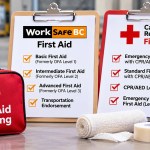
If your company requires a first aider then you will also require a full first aid qualification in addition to CPR. Courses such as Emergency First Aid with CPR/AED Level C combine first aid and CPR. For help deciding between them, see our guide to WorkSafeBC vs. Canadian Red Cross first aid.
Tips for getting the most out of the course
- Wear comfortable clothes. You will be required to kneel on the floor and perform compressions.
- Ask questions. This is what teachers usually expect and can often form the most valuable component of classes.
- Practise out loud. This aids your learning.
- Review before your certificate expires. Although a brief revision session in your own time is helpful, it should not be used in place of re-certification.
- Encourage others to train. Ideally there should be as many trained individuals as possible within a community so that if someone does experience difficulties then the prospects for them are increased.
Book CPR/AED Level C with Mainland Safety
Mainland Safety are a certified Red Cross and WorkSafeBC training centre based in Surrey, Burnaby, Langley, Abbotsford and Vancouver and the Fraser Valley. To date we have delivered training to over 20,000 learners since 2016.
Browse the CPR/AED Level C course, check the recertification course, or call +1-604-617-0211 to book.
Frequently Asked Questions
What is the difference between CPR Level A and Level C?
Level A includes assessing a situation, contacting emergency services, adult airway obstruction, recognising heart attacks and strokes, performing CPR and using an AED and controlling severe haemorrhage. Level C includes all of these elements but also involves child and infant CPR and airway obstruction. Parents, early childhood educators and teachers often select Level C.
How long does a CPR/AED Level C course take?
According to the Canadian Red Cross, Level C can consist of 5 hours classroom instruction, or 3 hours classroom and 3 hours e-learning. Classroom duration may differ between training providers so please confirm this when enrolling.
Do I need any experience or prerequisites?
There are no requirements to undertake this course and no medical qualifications are needed. Practical training is provided using manikins and an AED trainer. Your tutor will ensure that you are competent in the techniques being taught.
How do I pass the course?
You must be able to competently perform the techniques taught. In addition, you should obtain 75%+ in the theory assessment. Attendance and engagement in the course is also essential.
How long is my CPR certificate valid?
Both CPR Level A and C certificates are valid for 3 years. Upon finishing a course you will be issued with an electronic certificate. Please ensure that you can easily access a copy of this.
Can I recertify CPR Level C, and what about Level A?
Yes, you can re-certify in CPR Level C. This is a more brief course than the original one. Unfortunately, CPR Level A cannot be re-certified and so you would have to undertake the full course again. This would also be a suitable opportunity to upgrade to Level C. If your current certificate has already lapsed, please contact your training provider to establish if you are still able to re-certify, or if you must redo the full course.
Is CPR/AED Level C the same as a workplace first aid certificate?
Whilst CPR/AED Level C shows you how to manage cardiac arrest, airway obstruction and other relevant situations, to work as a named first aider within a workplace, you will require completion of a full first aid course – for example Emergency First Aid with CPR/AED Level C, or a WorkSafeBC first aid course. Typically, healthcare professionals will require training in Basic Life Support.
Where can I take CPR/AED Level C in Metro Vancouver?
Mainland Safety is a Canadian Red Cross accredited training provider and delivers and re-certifies in CPR/AED Level C within Surrey, Burnaby, Langley, Abbotsford, Vancouver and the Fraser Valley. Contact us on 604-617-0211 to reserve a place.